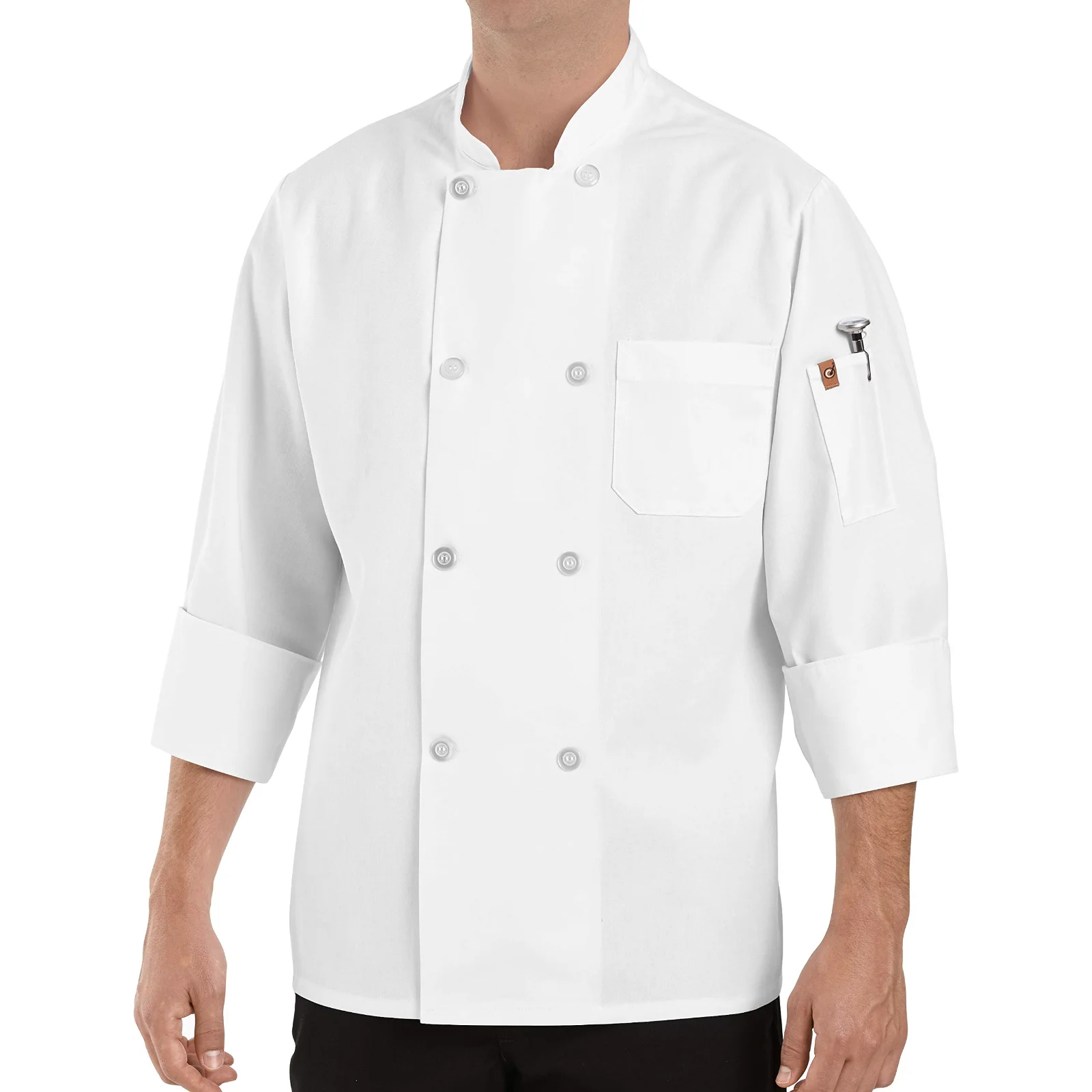
Eight pearl button coat · Coats
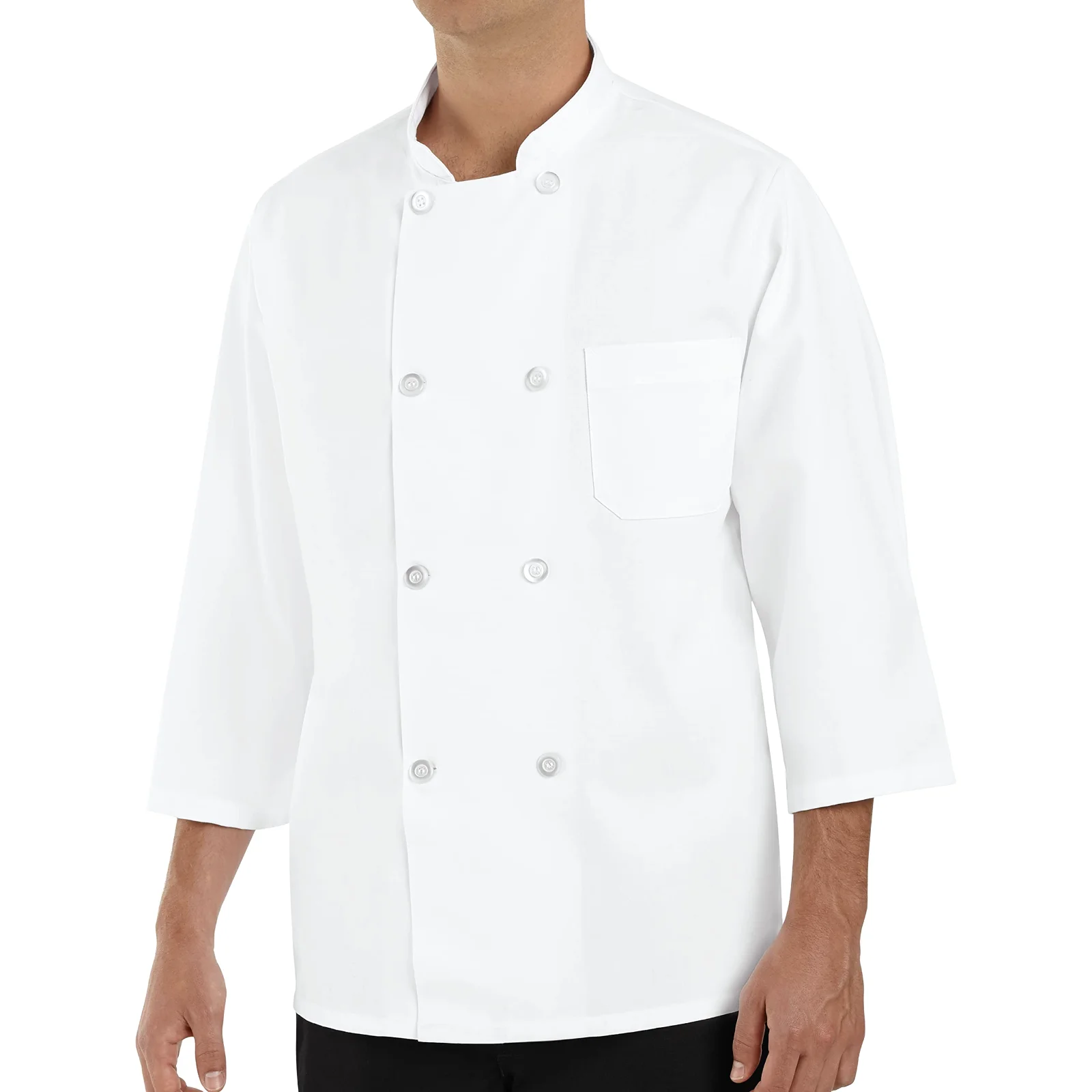
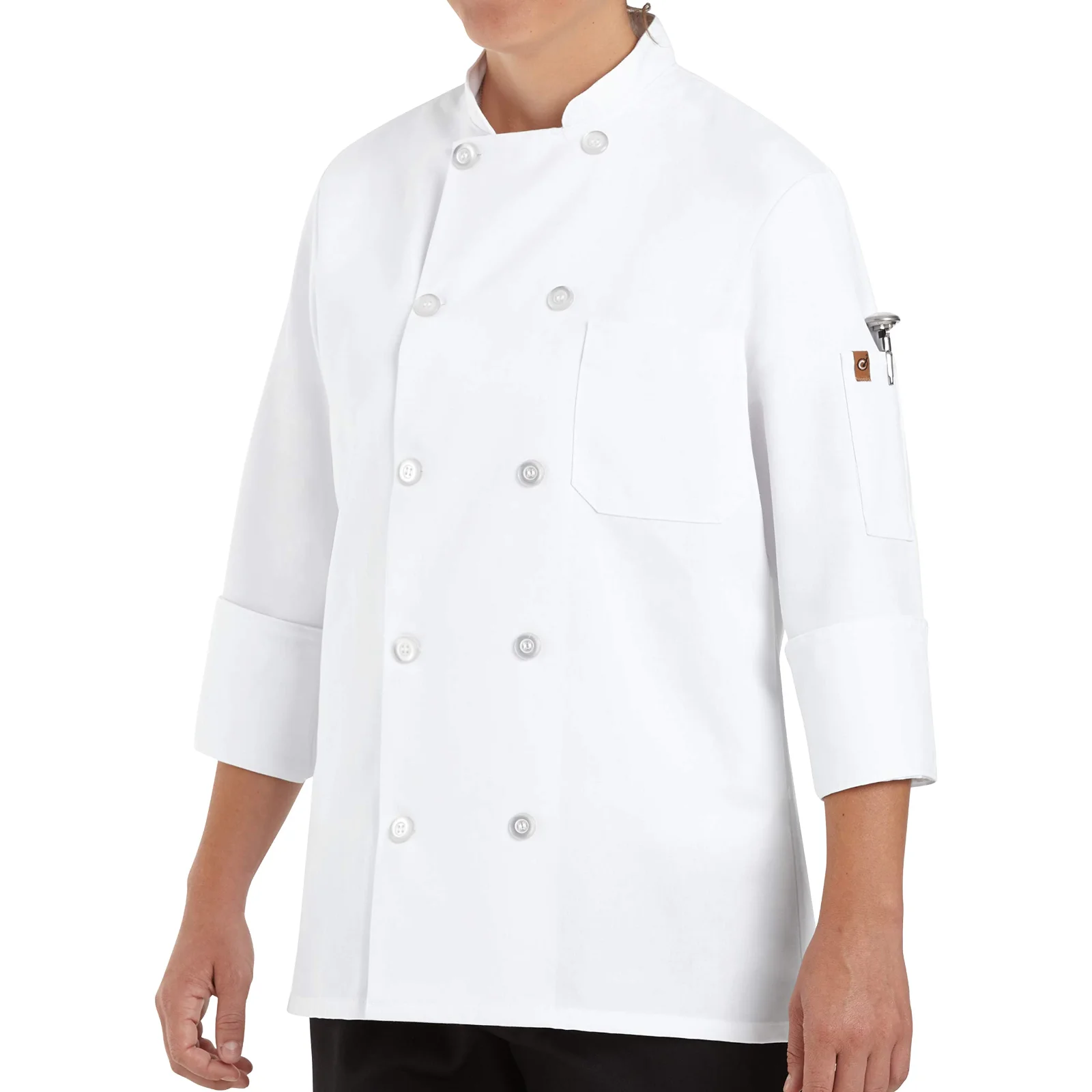
Eight Pearl Button Chef Coat
- Stand-up collar
- Sizes XS to 5XL, plus L Tall to 3XL Tall
- Chest pocket
4.6 (2,699)
from $18.81
The official Chef Designs catalogue
You are not buying a coat, you are buying the fourth one this year, and the question is which of them comes back white from the laundry. Every Chef Designs line here prints what does it up, what it is cut from, how many pockets it carries and the run it comes in, so you can put an order together at eleven at night without opening a phone call in the morning.
Start with what a kitchen reorders
Eight pearl buttons, stand-up collar01The order sheet
Written up the way a docket is: what does it up, what it is cut from, what run it comes in, and the price we hold at our last update.
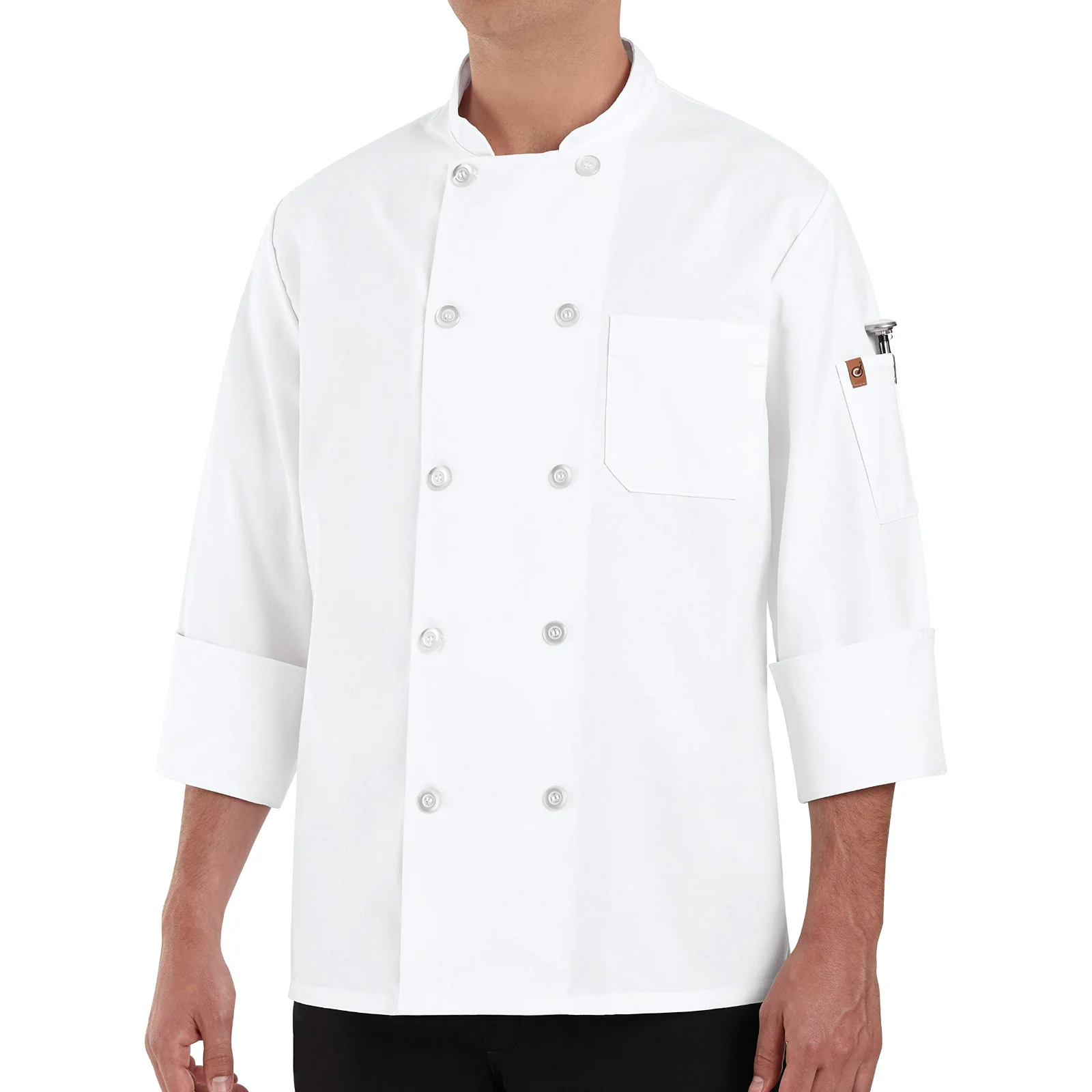
Eight pearl button coat · Coats
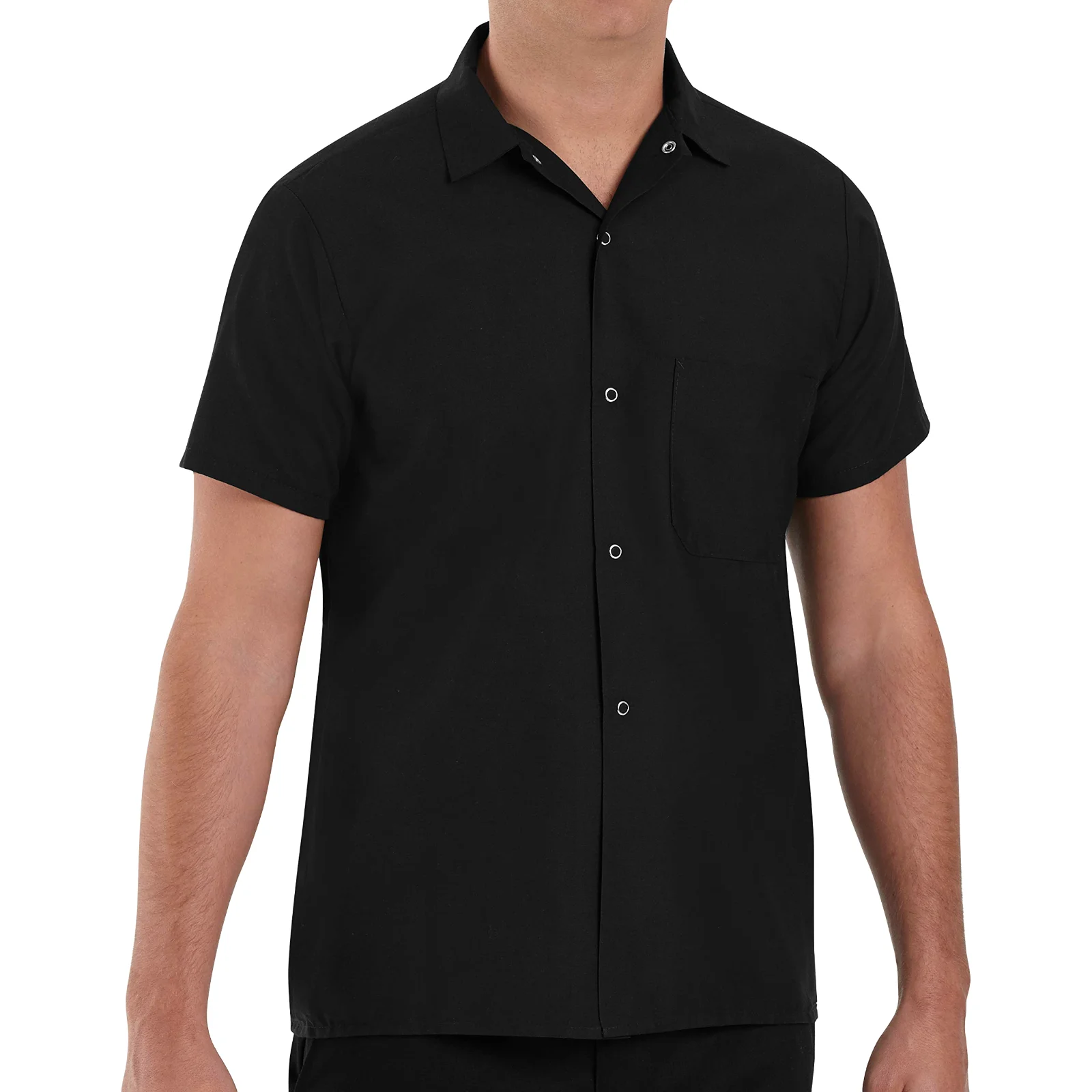
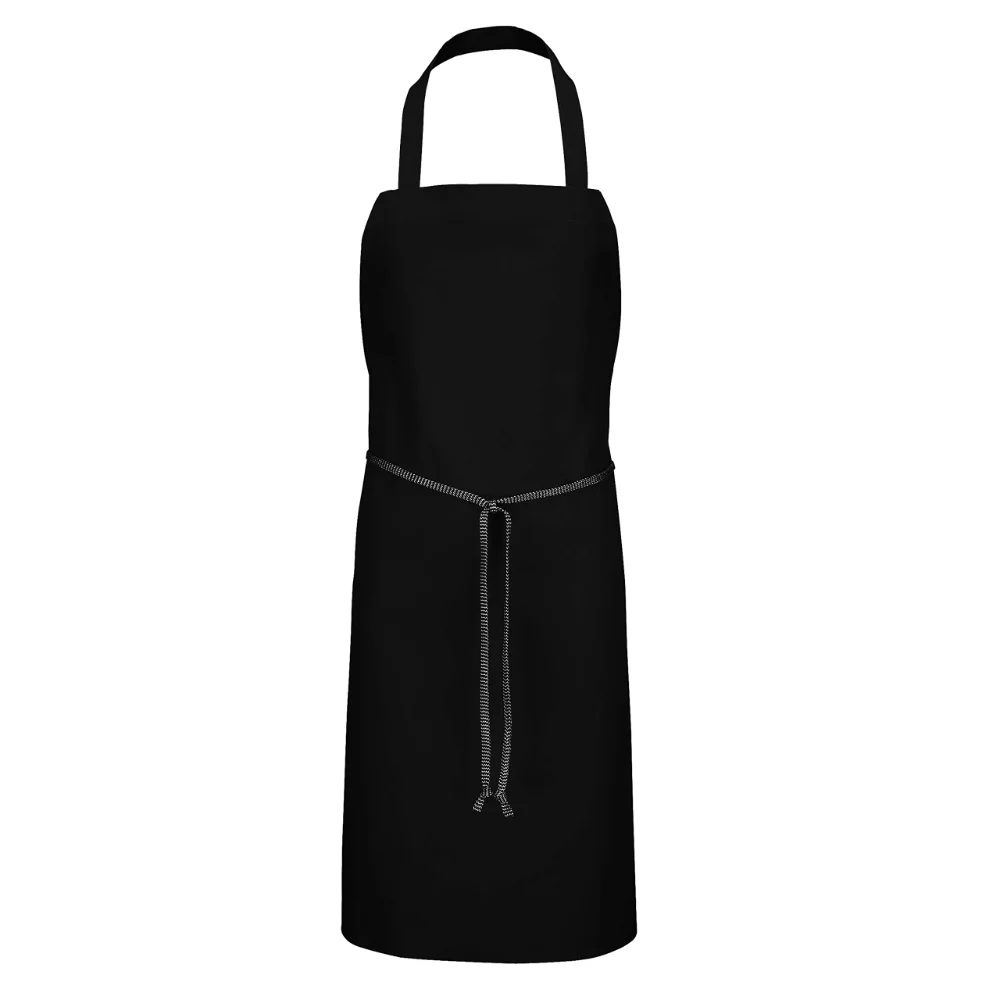
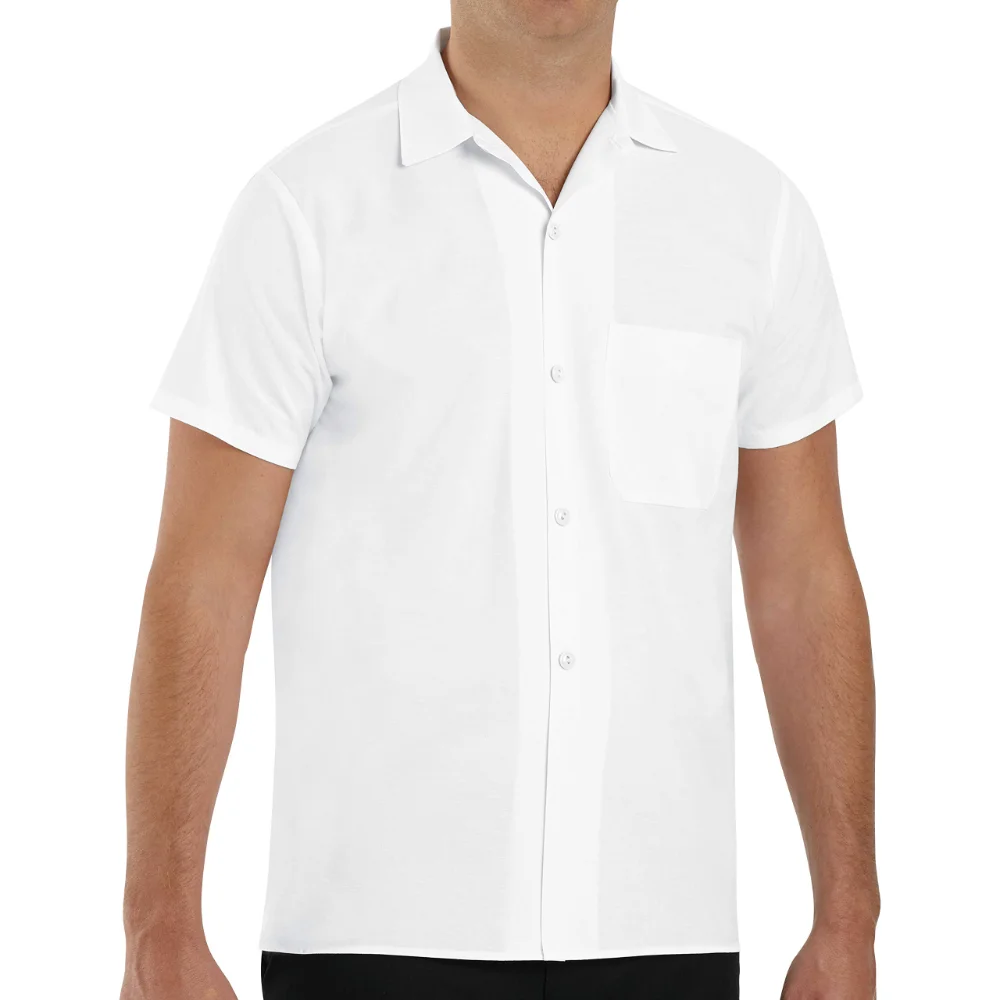
Button-front cook shirt · Shirts
Twelve of 23 lines. The rest sit on the five shelves below, and every figure here is the one from our last update of the Chef Designs approach.
02Five shelves
Everything on this site sits between nine and thirty-seven dollars, so price will not decide it for you. What the job does will: a line cook in a coat with the sleeves rolled, a dish porter in a shirt that snaps, a baker in a check pant.
03What we cut
Thirty seconds of the range as it is sold: the coats, the shirts, the pants and the aprons, one after another.
A Chef Designs coat does up in one of three ways, and that is the first thing to settle. Eight pearl buttons is the standard double-breasted front a kitchen has worn for a century; ten is the same coat with a closer set and a little more overlap across the chest; knot buttons are the ones that come off in the wash and go back on with a spare. The buttons are made not to yellow in an industrial laundry, which is the only reason a white coat stays white after forty runs through a steam cabinet.
Underneath the closure the cloth is nearly always the same: a 65/35 poly-cotton twill, pre-shrunk, with a stain-release finish and cuffs vented so a sleeve can be pushed up. It is the compromise a hot line needs. All-cotton comes back from a laundry looking slept in; all-polyester holds the heat of a flat top against you. The mix keeps its shape, sheds a splash of stock before it sets, and survives the temperature a commercial wash runs at.
That the garment is built for a commercial wash at high temperature with the chemistry a linen service uses, not for a home machine on a delicate cycle: pre-shrunk cloth so it does not lose an inch, a stain-release finish so grease lifts rather than sets, and buttons that do not go yellow under it. It is a construction claim about the garment and not a promise about a particular laundry contract.
The longer answer to what this brand is lives on Read what Chef Designs makes and who it is for.
04Straight to a garment
Coats first, then the pants, the shirts and everything worn over the top. Each page holds its own garments, prices, colourways and size runs.
Nine pages cut across the shelves, so a search for a black coat or a tall run lands on the part of the Chef Designs shelves that answers it.
The coat is the garment people mean when they type our name, and this page holds every one we cut. They are all double-breasted, all in the same pre-shrunk 65/35 twill, and what separates them is the front: eight pearl buttons, ten set closer for a little more overlap, or knot buttons with a card of spares in the office. Sleeve length is the second decision and the one you cannot change after the parcel arrives.
Ask a kitchen supplier what separates two white coats and the answer is the button. This page puts the three fronts we cut side by side: eight pearl buttons, ten set closer together, and the knot button that outlives a hot press but leaves the dryer on its own terms. Each card prints the run, the colour and the price we hold at our last update.
Uniform sizing usually gives up at 2XL, and a kitchen that has to dress everybody notices. These are the coats and shirts cut past that point: full runs to 4XL and 5XL, and tall versions of the eight pearl button coat and the long cook shirt, cut longer in the body and the sleeve rather than simply wider.
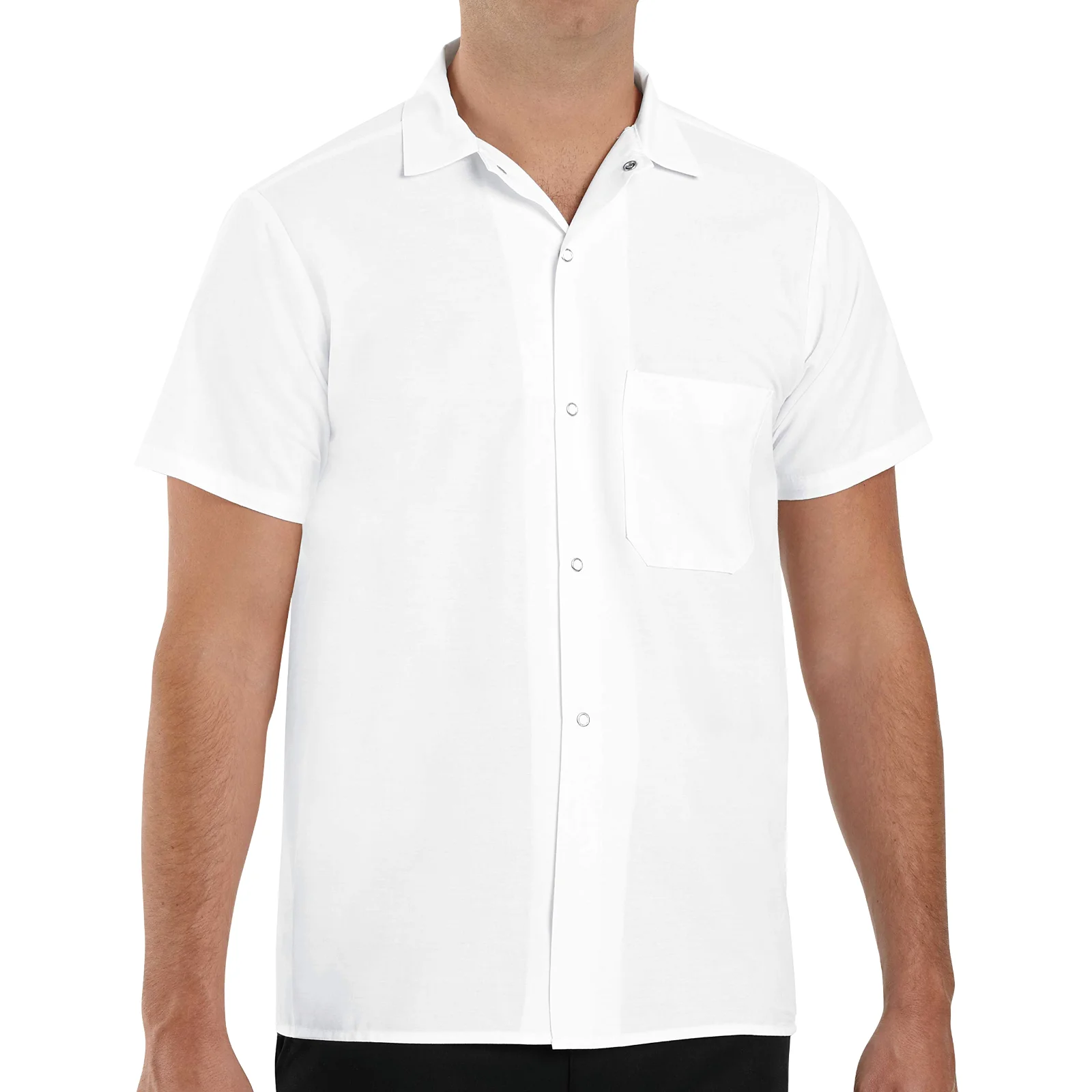
Not everyone in a kitchen needs a coat. Prep, dish, counter and delivery wear a cook shirt, and the choice comes down to the front: five grippers that pull apart in one movement, or five buttons that lie flatter under an apron bib. Both carry a one-piece collar and a chest pocket, and the long version is cut to stay in a waistband through a shift.
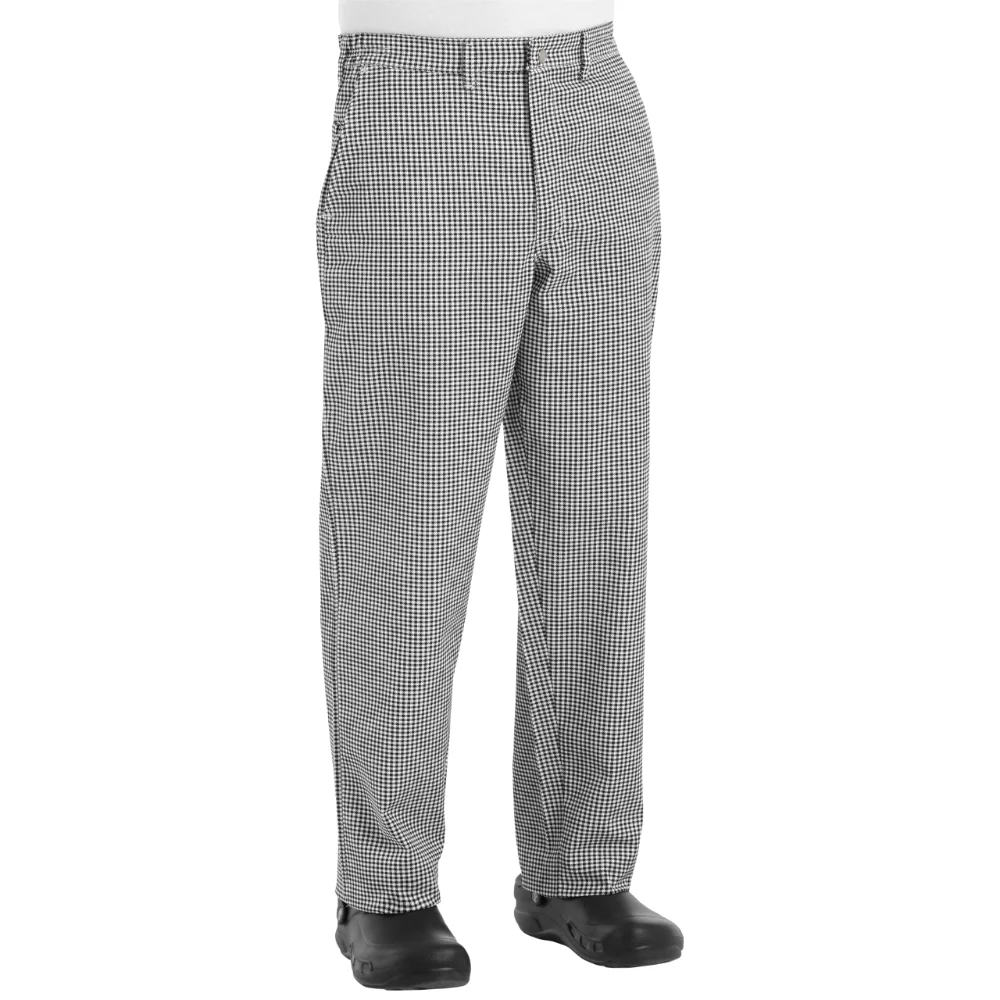
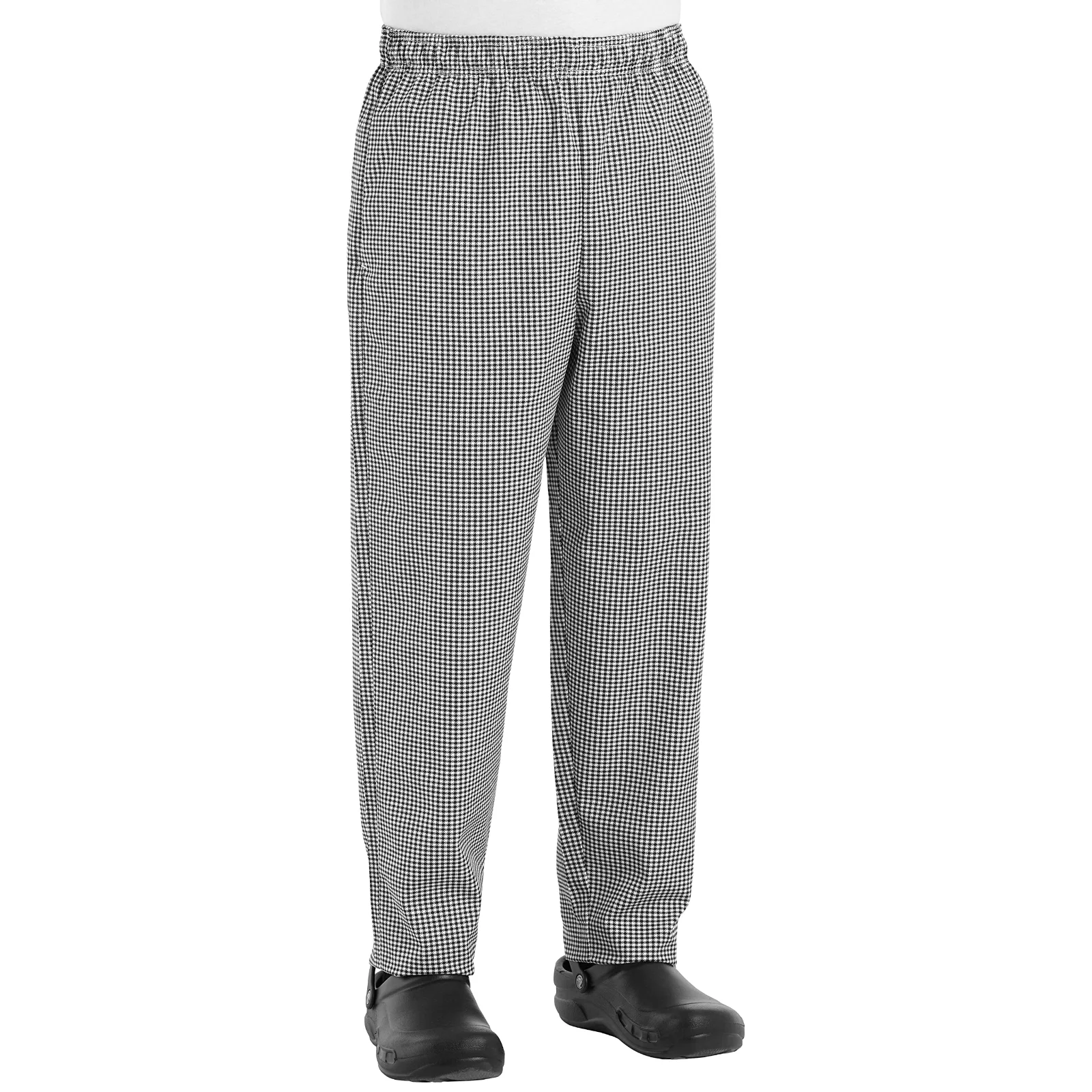
Pants are the half of a uniform nobody photographs and everybody complains about. Two answers here: the cook pant, sized waist by length from 28x30 to 54x34 with no button at the front to catch on a rack, and the baggy chef pant on a full elastic waist with a drawstring, cut wide so a hot kitchen moves air through it.
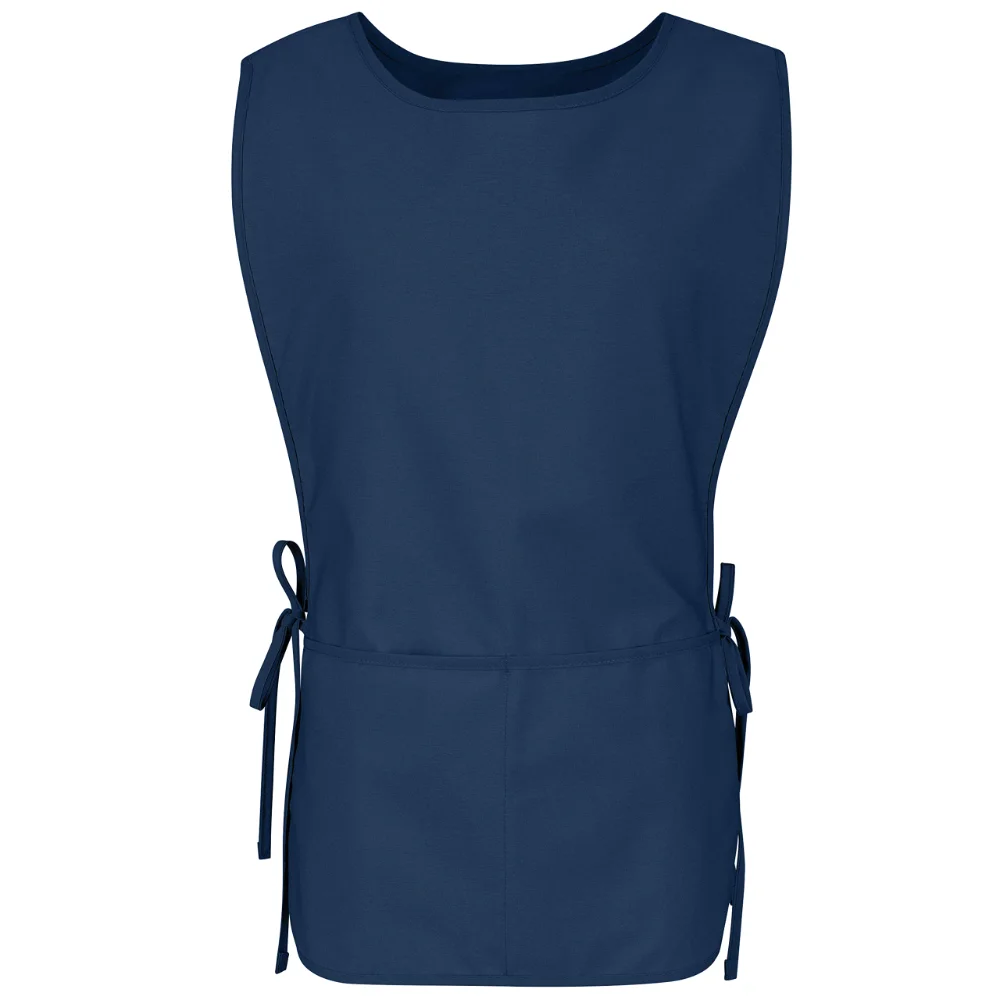
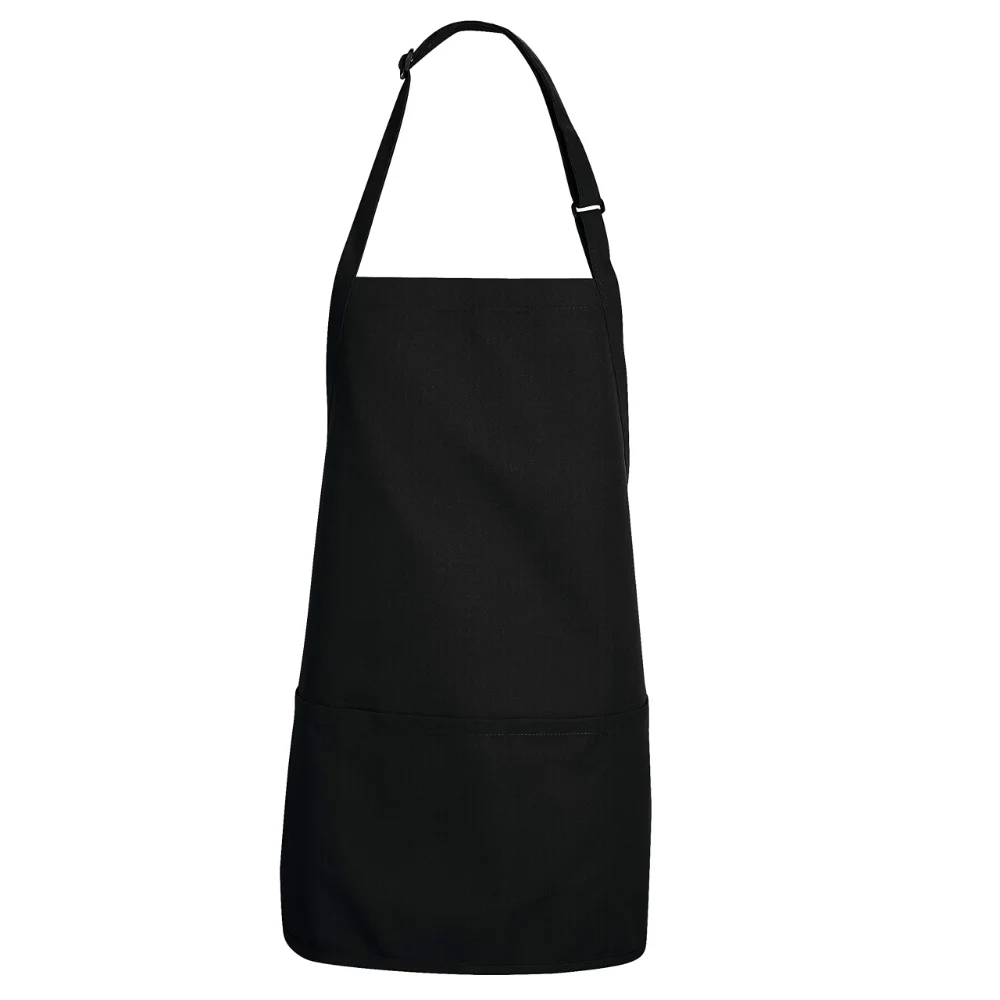
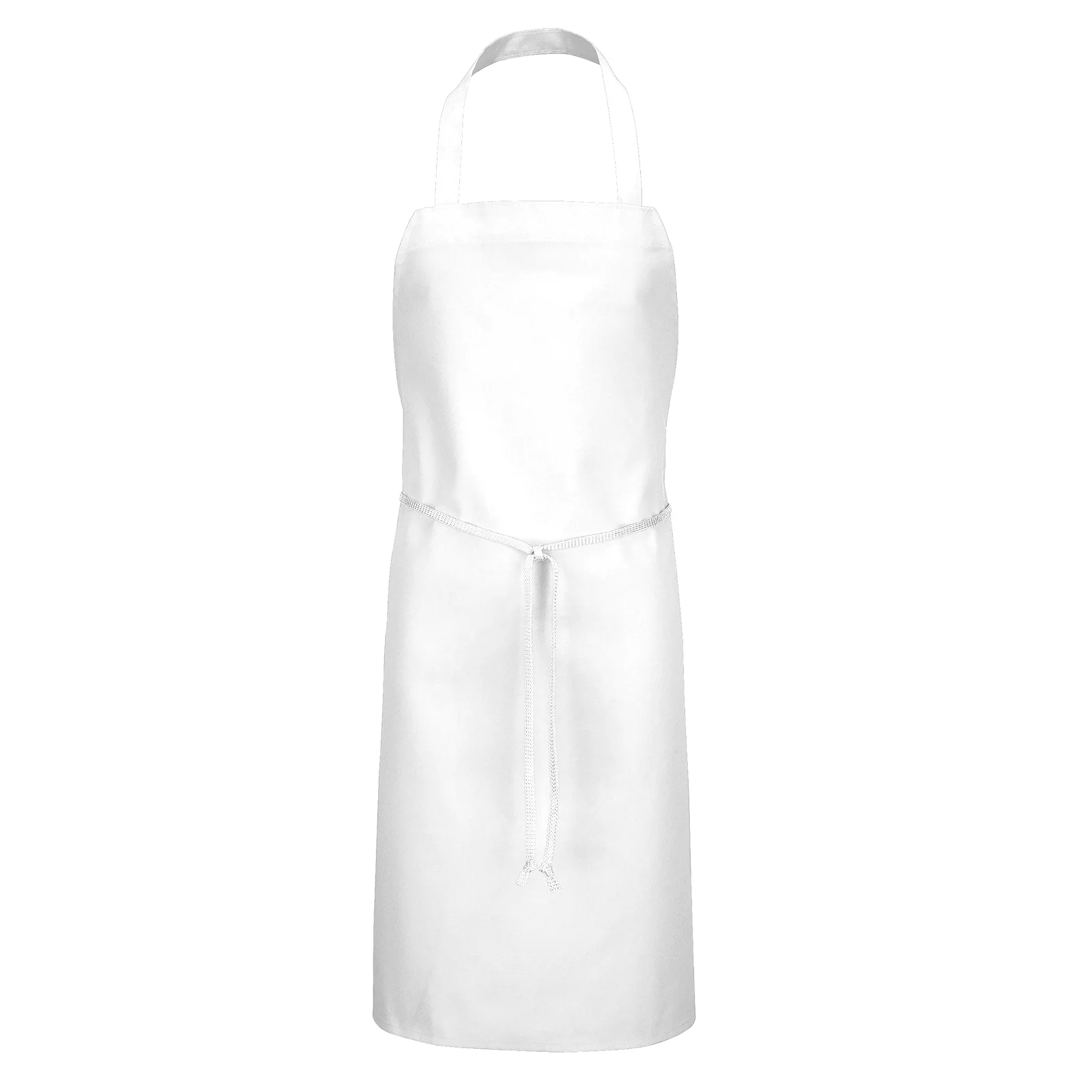
Aprons and hats are the cheapest lines on the order sheet and the ones a kitchen buys most often, because they are what gets changed when a coat cannot be. The four apron shapes cover four stations, the pleated hat and the skull cap cover two ways of keeping hair out of food, and the whole page sits under twenty dollars a piece.
05Who decides what
No names and no faces on this page: a face would be a stock photograph and a name would be a story. Four jobs instead, each one something you can hold a card against.
Decides how a front does up and says so on the card. Eight pearl buttons or ten on a coat, knot buttons where a kitchen wants a spare in the drawer, five grippers on a cook shirt so it comes off over the head at the end of a shift, and no button at all on the cook pant, where a side elastic replaces it.
Picks the blend for the wash the garment is going into and keeps the finish on it. A 65/35 poly-cotton twill on almost everything, spun polyester where black has to stay black, pre-shrunk before it is cut, stain release on the coats, soil release on the aprons.
Cuts the sizes the card prints. Letters from XS to 5XL on the coats and shirts, tall runs where a sleeve has to reach, waist by length from 28x30 to 54x34 on the cook pant, one size on the aprons and the hats. A letter describes the garment; the run is what you match a tape to.
Reads what you write in and fixes the page when you are right. A pocket count that argues with the photograph, a colour named wrongly, a size run that is short a code: the correction goes on the page and the address is at the foot of every one of them.
06Before you order
Most exchanges we hear about start the same way: the letter came off a t-shirt and the length came off a photograph. Take two measurements once and the run on every card turns into a filter.
Tape level round the fullest part of the chest, over the shirt you actually wear on a line, not over bare skin. A coat is cut to close double-breasted over that, so the figure you want is the one with a layer already under it. Between two letters on a coat, take the larger: the front crosses over twice.
The cook pant is sold waist by length, from 28x30 to 54x34. Lay a pair you already work in flat, measure the waistband end to end and double it, then measure the inside leg from crotch seam to hem. That pair of numbers is the size code on the card, with no guessing at a letter.
A full sleeve protects the forearm at a flat top; a 3/4 sleeve clears a sink; a 1/2 sleeve is the summer coat in a kitchen with no air handling. Decide by the station rather than the season, because the sleeve is what you cannot change after the parcel arrives.
07In their words
Comments about our own garments, shown as they came in, with the piece each one names linked underneath. The complaints are in: a coat that ran hot and a pant that ran long are worth more to you than another five stars.
★★★★★
He wears L and XL, depending on his bulking/cutting cycles. I ordered the XL because 1) I’d rather be safe than sorry and 2) it was the only size on prime that would arrive on time. That being said, the XL was perfect for him, and I believe the L would have been too small and not been able to button. He’s 6’2” and about 220lbs. He’s broad-shouldered and has a long torso. His biceps are also larger than average as he lifts and is in the beginning of a bulk. Hope this helps anyone else looking for the right size.
★★★☆☆
Sleeves on this chef’s coat came to just 2” above my wrists and I have longer than usual arms. Sleeves are also cut too wide, making them too bulky to risk wearing near hot surfaces. Overall cut of this coat was odd and uncomfortable so I returned it. Fabric and button placement were okay with the one I received, however, and I got the impression the coat would probably hold up over time but it might be a bit too warm in an active working kitchen.
★★★★☆
They fit true to size, but a little loose toward the bottom of the leg. These are decent quality inexpensive work pants for the kitchen. They don’t fade when washed and when you remove them and hang or fold them out of the dryer, they stay smooth and relatively wrinkle free. I bought four pair knowing I will need these daily- in kitchens and I don’t wear them out anywhere else. They are comfortable, the snap is nice and tight, the elastic side are a nice touch. Nice, deep pockets.
on Cook Pant
★★★★☆
I usually wear a men's US 38x32 in jeans, or 40x32 in work pants for more comfort. I ordered the XL size, and in the waist, they fit perfectly, if anything just a bit on the larger side, but they have a drawstring so I can tighten them up a bit. My only complaint is that the XL size is WAY too long for me.
★★★★★
I purchased these because I work as a dishwasher, and they're great! I get splashed a lot in my job, and these dry quickly without sticking to me. I have to bleach these each time I wash them, to get out the food stains that are part of my job, and I had no problem with the fabric degrading from the regular use of bleach.
on Cook Shirt
★★★☆☆
This shirt is both "somewhat small" and "somewhat large." The cut is huge in the belly, but it barely hugs my hips and as another reviewer mentioned, the bottom button is above my belly button. The material is kind of thick and starchy too.
★★★☆☆
This apron has a firm crisp finish and is bright white. Neck strap is extra long. Has good extra width and very long ties which are a cord, not sewn fabric. Looks great overall. However the stitches in one side seam were broken the very first time it was laundered.
★★★★★
It was light weight which is good because it gets hots and messy in the kitchen. It was true to size not bulky AT ALL. The tapered fit compliments the body and In like that it fits like a tunic length. It has pockets to hold equipment and provides great functionality.
★★★★☆
The quality of the product is excellent. The fabric is a nice weight and the ties are good quality as well. This product it is just not a good fit for me. The length of the apron is long and when I put items in the pocket it slides forward so the front is hanging much lower than the back.
08From the Pass
Why a kitchen coat is a poly-cotton blend and not cotton, how to size a coat over the shirt you already work in, and what an industrial laundry does to a garment that a home machine does not.
Every coat and nearly every shirt in this range is 65 per cent polyester and 35 per cent cotton, and cooks ask why it is not the cotton they would choose for a shirt. The answer is not cost. It is what a commercial wash at high temperature does to cotton, what all-polyester does to a cook standing over a flat top, and what a twill weave with a stain-release finish does about both.
A coat that fits in a fitting room and binds across the back when you reach into an oven was sized over bare skin. Where to put the tape, why a double-breasted front needs the larger of two letters, what a tall run changes that a bigger letter does not, and how to read a waist-by-length code on a cook pant without guessing.
A linen service washes hotter than a domestic machine, with chemistry a home wash never sees, and it is the reason a cheap coat is grey by March. What "industrial laundry friendly" is actually claiming, why a button is chosen for its behaviour under bleach, what pre-shrunk and stain release mean, and what the care label is still the last word on.
09Questions a kitchen asks
Six of them. Longer answers live on the shelf pages and in From the Pass.
Every buying button on this site opens the garment you were looking at, in the colourway you chose, at our retail partner. That is where you pick the size, where the payment, the delivery and any exchange happen, and the price you see there is the price you pay.
If you are putting a whole opening order together rather than replacing one coat, the button at the foot of every page opens the range instead of a single garment.
Measure your chest over the shirt you actually work in and hold that figure against the run on the buying page, not against the letter you buy in a t-shirt. A double-breasted coat crosses the chest twice, so between two letters the larger one is the safer order. The three numbers block further up this page walks through the coat, the pant and the sleeve.
That is what they are built for. The coats are cut from a pre-shrunk 65/35 poly-cotton twill with a stain-release finish, and the pearl buttons on the double-breasted fronts are made not to yellow under commercial laundry chemistry, which is the detail that decides whether a white coat still looks white in March. The label sewn into the garment is the document that governs the wash, and where it and a page here disagree, the label wins.
Nearly the whole range is a 65 per cent polyester, 35 per cent cotton twill. The blend is a working compromise rather than a saving: all-cotton comes out of a commercial wash looking slept in, and all-polyester holds the heat of a flat top against you. The black spun-poly coat and the black long cook shirt are the exceptions, cut from spun polyester so the black stays black. Fibre content is printed the way a label has to state it, in descending order by weight.
The baggy chef pant. It is cut wide through the thigh so air moves, sits on a full elastic waist with a drawstring, and comes in the black-and-white check as well as plain black. The cook pant is the tidier one: a side elastic waist, no button at the front, four pockets, and sizing in waist by length from 28x30 to 54x34, which is what you want when the pant is seen by guests.
More than one, and that is a rule rather than an upsell: the Food Code asks a food employee to wear clean outer clothing, and the apron is the layer that takes the splash so the coat does not. Kitchens that change aprons mid-service usually keep three or four per person against a laundry cycle. The apron shelf explains which shape suits which station.
Prices on this page are the figures from our last update; the Chef Designs rule updates them on a schedule, and the figure at the till is the one that counts.
Every closure, every run
Every coat, shirt, pant, apron and hat in the Chef Designs shelves sits behind this button, with the price from our last update against each one.